About
About
Where we're headed, and the values we hold to.
Vision
Bringing the maritime
industry together.
For the children of the future, we are revolutionizing the maritime industry with AI. We unify data and operations that have been scattered across the industry, connecting what happens on site with the decisions made in the boardroom in real time — turning judgment that once rested on experience and intuition into something precise and repeatable, and building new infrastructure for the maritime industry.
Values
Focus on one thing
We decide what deserves our attention, then give ourselves to it completely — the whole team working as if in a state of flow.
Favor sustainable, long-term gain
We value long-term value creation over short-term profit, building lasting trust through coexistence with society.
Think from first principles
We return to underlying laws and principles, look past precedent and convention to find what is essential, and act where the leverage is greatest — guided by data and fact.
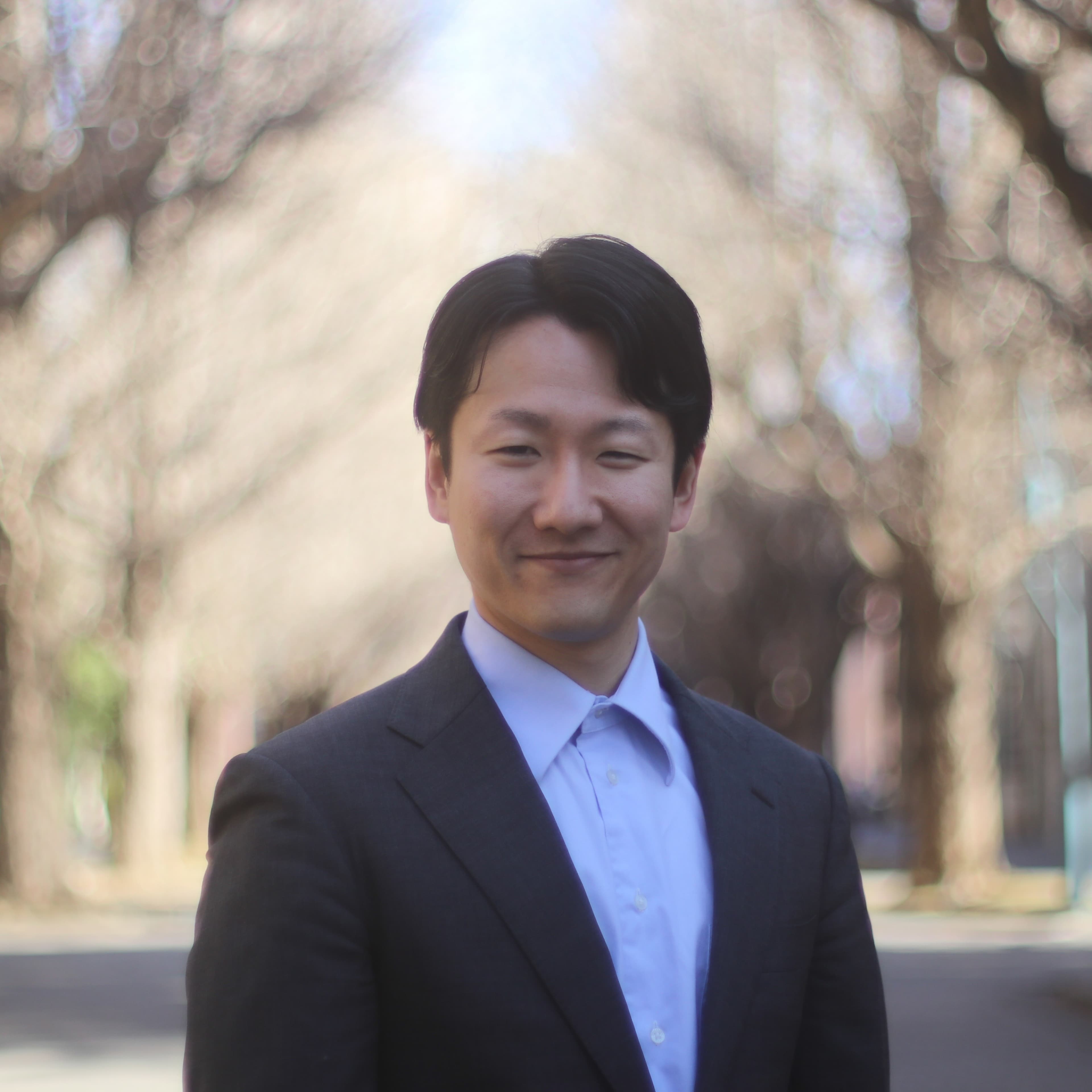
Yusuke FUKUJUCEO
Representative Director & CEO
CEO Message
Carrying the maritime industry into its next era
I grew up in Toyota City, Aichi — a town built around the automotive industry. A single industry created jobs, sustained the town, and gave people work they were proud of. That sight is my earliest reference point. But no industry is guaranteed another hundred years. So I came to see it as my role to build, with my own hands, the next industry that will support Japan.
I studied computer vision at the University of Tokyo and went on to build businesses as a founder and CTO at AI startups. Through both the successes and the regrets, I became convinced of one thing: if you intend to compete globally from a base in Japan, you have to find the field where starting in Japan is the single greatest advantage. Take a domain that only someone here would take on, and go for the top of a global niche. The answer was the maritime industry. It is a growth industry tied to the world economy, Japan holds a historical advantage in it, and it is right now at a moment of change. I don't believe any other field satisfies all three.
When we went into the field, we saw both the strength and the fragility of this industry. At one shipyard, the design of a vessel made of roughly a million parts rested almost entirely on a single 68-year-old engineer. The expertise that has carried Japanese shipbuilding sits in one person's head, on the verge of being lost before it can be passed on. Japan's shipbuilding industry, once holding 50% of the world market, has fallen to the low teens — yet for a country where shipping carries more than 99% of imports and exports, the ability to build ships is a foundation we must never let go. This is the first and last window in which that knowledge can be handed to AI. Three years ago was too early; three years from now is too late. We take on this work with that conviction.
Generative AI is said to have made software development eight times more productive. The greatest benefit of that revolution falls to one-off engineering, where mass production never applies — and shipbuilding, where every vessel differs, is the clearest case of all. Our work is to carry the productivity revolution that happened in software across the whole of the maritime industry, where Japan is strong. To cut a year-long design cycle to a tenth, so that the person who used to work Saturdays can have their Saturday back. That is the industry we intend to build together with the people in the field.
Technology alone, however, does not change an industry. That is why we spend half of every week at shipyards — not as an IT vendor, but as people prepared to stay with this industry as part of its future.
For the children of the future, we will revolutionize the maritime industry with AI, and bring it together as one. The new history that lies beyond it, we intend to write together with everyone in this industry.
Representative Director & CEO Yusuke FUKUJU